Tuesday, October 13, 2009
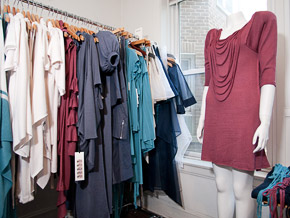
DOES THIS MAKE MY BUTT LOOK BIG? HOW TO BALANCE YOUR BOTTOM LINE

Thursday, October 8, 2009
Irving Penn, Fashion Photographer, Is Dead at 92
Irving Penn, one of the 20th century’s most prolific and influential photographers of fashion and the famous, whose signature blend of classical elegance and cool minimalism was recognizable to magazine readers and museumgoers worldwide, died Wednesday morning at his home in Manhattan. He was 92.
Multimedia
His death was announced by Peter MacGill, his friend and representative.
Mr. Penn’s talent for picturing his subjects with compositional clarity and economy earned him the widespread admiration of readers of Vogue during his long association with the magazine, beginning in 1943. It alsobrought him recognition in the art world; his photographs have been exhibited in museums and galleries and are prized by collectors.
His long career at Vogue spanned a number of radical transformations in fashion and its depiction, but his style remained remarkably constant. Imbued with calm and decorum, his photographs often seemed intent on defying fashion. His models and portrait subjects were never seen leaping or running or turning themselves into blurs. Even the rough-and-ready members of the Hell’s Angels motorcycle gang, photographed in San Francisco in 1967, were transformed within the quieting frame of his studio camera into the graphic equivalent of a Greek frieze.
Instead of spontaneity, Mr. Penn provided the illusion of a seance, his gaze precisely describing the profile of a Balenciaga coat or of a Moroccan jalaba in a way that could almost mesmerize the viewer. Nothing escaped the edges of his photographs unless he commanded it. Except for a series of close-up portraits that cut his subjects’ heads off at the forehead, and another, stranger suite of overripe nudes, his subjects were usually shown whole, apparently enjoying a splendid isolation from the real world.
He was probably most famous for photographing Parisian fashion models and the world’s great cultural figures, but he seemed equally at home photographing Peruvian peasants or bunion pads. Merry Foresta, co-organizer of a 1990 retrospective of his work at the National Museum of American Art, wrote that his pictures exhibited “the control of an art director fused with the process of an artist.”
A courtly man whose gentle demeanor masked an intense perfectionism, Mr. Penn adopted the pose of a humble craftsman while helping to shape a field known for putting on airs. Although schooled in painting and design, he chose to define himself as a photographer, scraping his early canvases of paint so that they might serve a more useful life as backdrops to his pictures.
He was also a refined conversationalist and a devoted husband and friend. His marriage to Lisa Fonssagrives, a beautiful model, artist and his sometime collaborator, lasted 42 years, ending with her death at the age of 80 in 1992. Mr. Penn’s photographs of Ms. Fonssagrives not only captured a slim woman of lofty sophistication and radiant good health; they also set the esthetic standard for the elegant fashion photography of the 1940s and ’50s.
Ms. Fonssagrives became a sculptor after her modeling career ended. In 1994, Mr. Penn and their son, Tom, a metal designer, arranged the printing of a book that reproduced his wife’s sculpture, prints and drawings. In addition to his son, Mr. Penn is survived by his stepdaughter, Mia Fonssagrives Solow, a sculptor and jewelry designer; his younger brother, Arthur, the well-known director of such films as “Bonnie and Clyde,” and eight grandchildren.
Mr. Penn had the good fortune of working for and collaborating with two of the 20th century’s most inventive and influential magazine art directors, Alexey Brodovitch and Alexander Liberman. He studied with Mr. Brodovitch in Philadelphia as a young man and came to New York in 1937 as his unpaid design assistant at Harper’s Bazaar, the most provocative fashion magazine of the day. But it was under Mr. Liberman, at Vogue, that Mr. Penn forged his career as a photographer.
Wednesday, September 16, 2009
Fashion Week Goes Eco-Chic

Although manufacturing eco-friendly fashion is a cause Miller feels strongly about, it isn't exactly economically friendly. Miller says materials like organic cotton and bamboo can be expensive because they are hard to find. "Silk is actually the least expensive fiber I work with because it's already so popular," she says. As eco-fashion gains popularity, Miller says she expects prices to get better—for both designers and shoppers.
If you can't find eco-fashion in stores near you, Miller says there are other ways to be green. "I really think there is something to be said about investing in pieces you feel really strongly about versus buying 20 throwaway garments from Target—and then literally throwing them away into a landfill."
Monday, September 14, 2009
Trends Anyone Can Wear

KARA DIOGUARDI: UNCOMMON COLOR MIXES
Tone up! Two or more shades, inventively combined, make for a brighter outlook.
The color wheel turns again as designers go in for daring juxtapositions of rich, sophisticated hues like violet and saffron (blouse, Club Monaco, $119; skirt, J.Crew, $78). To make a mix like this work, use tones that are the same level of intensity; it also helps to separate them (grosgrain ribbon worn as belt, Mokuba). The one-bare-shoulder look highlights a part of the anatomy that's slow to age (hooray!). Kara DioGuardi, who needs interesting tops as a judge for Fox's iconic music show American Idol—she's mostly seen from the waist up—says this style makes her feel "sexy but still strong." Edgy quartz, onyx, and sapphire jewelry (Iradj Moini) and glittery-strapped nude shoes (Lanvin) give this Grammy-nominated composer (for everyone from Gwen Stefani to Celine Dion) a touch of rocker chic.
Saturday, September 12, 2009
Tim Gunn Gets Real

The fashion, the models, the celebrities, the tents—it can only be New York fashion week. Gunn, a fashion authority and beloved mentor on Project Runway, will be surrounded by it all this September.
Charming, witty and impeccably well-mannered, Gunn recognizes this. He isn't the typical fashion figure—he's not afraid to declare that fashion should be for everyfigure.
"We are on the cusp of fashion week, and on the one hand I love it and the whole exhilaration of it," Gunn says. "On the other hand, those women walking the runway are not from this planet. Many of them haven't even left puberty. So how can someone in the audience look at these women and think, 'Oh, I'd look great in that?'"
Wednesday, September 9, 2009
Shopping in Paris @ the Art Museum

“Common creatures, in other cities, dress to live; but in Paris people live to dress.” –
Charles Dickens (1867).
We all know how Paris has been inspiring fashion addicts for centuries, but it is fascinating to discover the evolution of the shopping process.
The Shopping in Paris exhibition, showing at the Spain Gallery of the Philadelphia Art Museum until October 25th, pairs, among its nearly 35 garment and accessories, the luxurious designs of leading couturiers such as Charles Worth, Emile Pingat and Paul Poiret with American fashion items inspired by these Parisian designers.
The exhibit also underlines the radical changes in ladies fashion at the corner of the century, evolving from stiff, heavy gowns to light, leg-showing dresses as women were experiencing a newly found independence.
Shopping in Paris French Fashion 1850-1925 Now through October 25, 2009
Philadelphia Museum of Art 2600 Benjamin Franklin Pkwy, Philadelphia, PA (215) 235-3200